
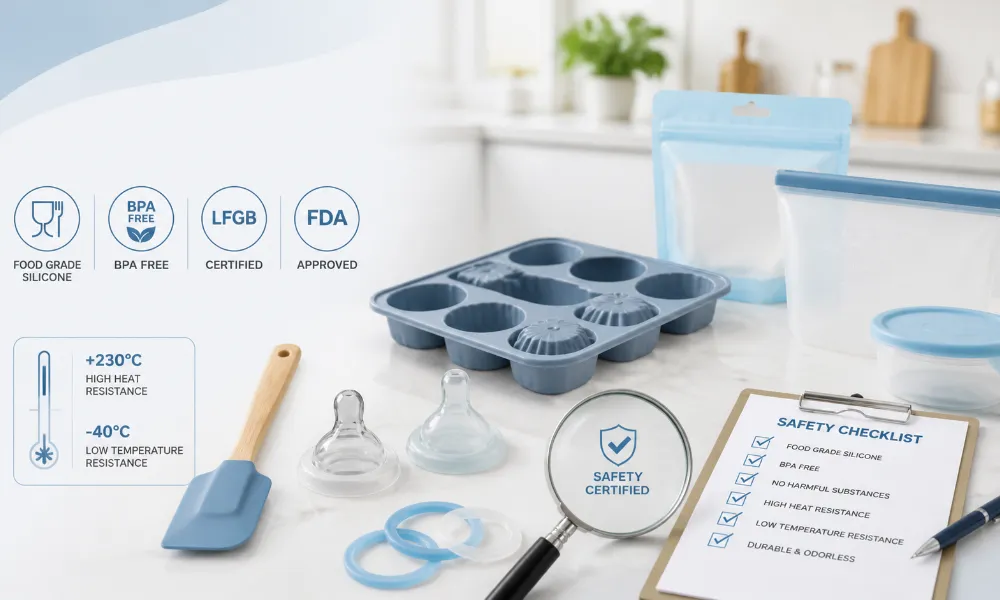
The most practical thing you can do before buying any silicone kitchen product is learn what “food grade” actually means in terms of material composition, regulatory compliance, and independent testing. That knowledge takes only a few minutes to build, and it applies to every silicone spatula, baking mat, mold, and storage bag you will ever consider.
What Makes a Silicone Product Safe for Food Contact
The safety of a silicone product starts at the molecular level, not on the packaging. Material purity, the curing process used during manufacturing, and the physical performance traits of the finished product all determine whether it is genuinely safe for food contact.
How Food-Grade Silicone Differs From Standard Silicone
All silicone rubber is built from a polymer backbone, but food-grade silicone is manufactured to a much higher purity standard. Standard silicone may contain fillers, processing aids, or residual chemicals that are acceptable for industrial gaskets or automotive parts but not for items that touch your food.
Food-grade silicone is formulated to be free of BPA, phthalates, and heavy metals. It undergoes additional purification steps to remove volatile compounds. The result is a material that is odorless, tasteless, and non-reactive when it contacts food or beverages, even at elevated temperatures.
I have handled plenty of silicone products over the years, and the difference between a genuine food-grade item and a cheaper industrial-grade one is often noticeable. Lower-quality silicone tends to have a faint chemical smell right out of the box.
Why PDMS Composition and Curing Matter
The primary polymer in food-grade silicone is polydimethylsiloxane, commonly abbreviated as PDMS. This is the same base material used in liquid silicone rubber formulations designed for food and medical applications.
The curing method matters just as much as the base polymer. Platinum-cured (addition-cured) silicone is the preferred process for food-contact products. It produces no byproducts during curing, which means fewer residual chemicals in the finished product. Peroxide-cured silicone, by contrast, can leave trace peroxide residues unless it goes through a thorough post-cure bake cycle.
When I evaluate a silicone product, I look for confirmation that it uses a platinum cure system. This single detail tells me a lot about whether the manufacturer prioritized food safety during production.
Core Performance Traits That Support Safe Use
Beyond chemistry, food-grade silicone must perform reliably under real kitchen conditions. The key traits I look for include:
- Temperature resistance: Safe continuous use from approximately -40°F to 450°F (-40°C to 230°C)
- Non-porous surface: Resists bacterial growth and does not absorb flavors or odors
- Chemical inertness: Does not react with acidic or alkaline foods
- Flexibility without tearing: Maintains structural integrity through repeated bending and use
These traits are not just selling points. They are functional requirements that keep the material stable and prevent it from breaking down into your food over time.
Standards, Certifications, and Label Claims to Verify
Not all “food safe” labels carry the same weight. The difference between a product that meets a recognized regulatory standard and one that simply prints a reassuring phrase on its box is significant. Knowing which standards apply in the U.S. helps you separate verified compliance from empty marketing.
What FDA 21 CFR 177.2600 Covers
In the United States, the primary regulation for food-contact silicone rubber is FDA 21 CFR 177.2600. This regulation sets limits on the amount of extractable material that can migrate from the silicone into food under specific test conditions, including exposure to heat, acids, and solvents.
A product that complies with 21 CFR 177.2600 has been tested to confirm it does not release harmful substances during normal food contact. It is important to understand that the FDA does not “approve” or “certify” individual consumer products. The regulation defines material requirements, and manufacturers are responsible for ensuring compliance.
When a product claims “FDA compliant,” it should mean the silicone material has been tested against 21 CFR 177.2600 extraction limits. I always recommend asking the seller or manufacturer for actual test documentation rather than relying on a printed logo alone.
When NSF/ANSI 51 Is Relevant
NSF/ANSI 51 is a third-party standard that applies to food equipment materials, including silicone components used in commercial food processing and foodservice. It is administered by NSF International, an independent organization.
This standard goes beyond the FDA regulation by requiring independent laboratory testing and periodic facility audits. Products that carry NSF certification have been evaluated by a third party, not just the manufacturer.
For home cooks, NSF/ANSI 51 certification is less commonly seen on retail products but is a strong indicator of quality when present. For food-business buyers sourcing silicone tubing, gaskets, or equipment components, NSF certification is often a baseline requirement.
How to Evaluate Food-Safe Marketing Claims
I have seen products labeled “food safe,” “FDA approved,” and “100% food grade” that had no verifiable documentation behind those claims. Here is how I approach evaluation:
- Ask for test reports: A reputable manufacturer will provide extraction test results referencing 21 CFR 177.2600 or an equivalent standard.
- Check for third-party certification marks: NSF, LFGB, or other recognized logos that require independent testing.
- Be skeptical of vague language: Terms like “premium food grade” or “safe for kitchen use” are not regulated phrases.
- Consider the source: Unbranded products from unknown sellers on marketplace platforms carry higher risk than products from established silicone manufacturers with documented quality systems.
A genuine food-grade claim should always be backed by paperwork, not just packaging design.
How Safety Applies Across Common Kitchen and Food Uses
Different silicone products face different stresses in the kitchen. A baking mat endures sustained oven heat, while a spatula encounters brief contact with hot pans. Each application has its own practical safety considerations worth knowing.
Bakeware, Mats, and Molds
Silicone baking mats, silicone molds, and silicone baking trays are among the most popular food-grade silicone items in home kitchens. They typically face prolonged heat exposure, which makes material quality especially important.
I keep my oven temperature at or below 450°F when using silicone bakeware. Most reputable products list a maximum temperature around this range. Exceeding it risks degrading the material, even if the silicone does not visibly melt.
Silicone molds work well for baking, freezing, and candy making. Their flexibility makes removal easy. One thing I have noticed is that deeply colored molds from unknown brands sometimes have a noticeable odor when heated, which can indicate lower-purity material or excessive pigment additives.
Utensils, Spatulas, and Cookware
Silicone spatulas, silicone utensils, and silicone cookware handles generally experience shorter bursts of heat rather than sustained oven temperatures. The primary safety concern here is whether the silicone head or coating is securely bonded to the handle and free of cracks where food can get trapped.
I inspect silicone utensils for signs of wear every few months. A spatula that has developed tears or a rough surface is more likely to harbor bacteria and should be replaced.
Quality silicone utensils should not stain easily, transfer odors to food, or soften noticeably during normal stovetop cooking.
Storage, Beverage, and Tubing Applications
Silicone food storage bags, lids, and beverage straws are growing in popularity as reusable alternatives to single-use plastics. For these items, I pay attention to seal integrity and whether the product retains odors after washing.
Silicone tubing is common in coffee machines, beverage dispensers, and commercial food processing equipment. Tubing for food contact should specifically reference FDA 21 CFR 177.2600 compliance, and in commercial settings, NSF/ANSI 51 certification adds an important layer of verification.
For any storage or beverage application, food-grade silicone’s non-porous surface is a genuine advantage. It does not absorb flavors the way some plastics do, which I have confirmed through years of personal use.
Choosing, Using, and Caring for Silicone With Confidence
Making a smart purchase is only part of the equation. How you use, clean, and monitor your silicone products over time has a direct effect on their safety and lifespan.
Buying Tips for Better-Quality Products
When shopping for food-grade silicone products, I follow a few consistent rules:
- Choose platinum-cured silicone when the manufacturer specifies the cure type. Liquid silicone rubber products are often platinum-cured by default.
- Buy from brands that publish test certifications on their websites or product listings.
- Avoid the cheapest options on marketplace platforms unless you can verify compliance documentation.
- Check for uniform color and texture. Inconsistencies may suggest filler materials.
Spending a few extra dollars on a verified product is always worth it compared to the uncertainty of an untested one.
Safe Heating, Cleaning, and Replacement Practices
Most food-grade silicone cookware and bakeware is safe in ovens up to 450°F, in microwaves, in freezers, and in dishwashers. I recommend following the manufacturer’s stated temperature limits rather than assuming all silicone handles heat the same way.
For cleaning, warm soapy water works for daily use. Dishwasher cleaning is fine for most products. If a silicone item develops a greasy residue that does not wash off, soaking it in a baking soda and water solution usually resolves the issue.
Replace any silicone product that shows visible cracking, tearing, discoloration from heat damage, or persistent odor after thorough cleaning. These are signs the material may no longer perform as intended.
Red Flags That May Indicate Lower-Quality Material
Over the years, I have learned to watch for several warning signs:
- Strong chemical smell out of the package
- White discoloration when twisted or pinched, which can indicate filler content
- Sticky or tacky surface feel that does not go away after washing
- No brand name, no certifications listed, and no contact information for the manufacturer
- Unusually low price compared to similar products from established brands
Any one of these does not necessarily mean the product is unsafe, but a combination of several should make you cautious.
Frequently Asked Questions
What does “food grade” silicone mean, and how is it certified?
Food-grade silicone is silicone rubber that has been manufactured to a high purity standard, free of harmful chemicals like BPA and phthalates, and tested to confirm it does not release unsafe substances during food contact. In the U.S., it must meet the extraction limits defined in FDA 21 CFR 177.2600. Certification is verified through laboratory testing of the material, not through an FDA approval stamp on the product itself.
How can you tell whether a silicone kitchen product is genuinely safe for food contact?
Look for documented compliance with FDA 21 CFR 177.2600 or third-party certifications like NSF/ANSI 51. A trustworthy manufacturer will provide test reports when asked. Physical checks include confirming the product has no chemical odor, does not turn white when pinched, and has a smooth, uniform surface.
What temperature limits are considered safe for silicone in ovens, microwaves, and dishwashers?
Most food-grade silicone is rated for continuous use between -40°F and 450°F, making it safe for standard oven baking, microwave heating, freezer storage, and dishwasher cleaning. Always follow the specific temperature range printed on the product or its packaging, as some items may have a lower maximum rating depending on the formulation.
Can silicone cookware or bakeware leach chemicals or affect food taste and odor?
Properly manufactured food-grade silicone does not leach harmful chemicals or alter the taste or smell of food under normal use conditions. Studies and FDA testing confirm that compliant silicone remains chemically stable during cooking and baking. If a silicone product imparts a taste or smell to your food, it may not be genuine food-grade material or it may contain excessive fillers.
Are there health concerns with fillers, pigments, or additives used in colored silicone items?
Fillers and pigments are common in colored silicone products, and in quality items, these additives are themselves food-safe and used in controlled amounts. Concerns arise when manufacturers use cheap fillers to cut costs, which can reduce heat stability and increase the risk of material breakdown. Buying from brands that disclose their compliance testing helps reduce this risk.
How should silicone food-contact products be cleaned and maintained to prevent contamination?
Wash silicone products with warm soapy water or place them in the dishwasher after each use. For stubborn grease or odors, soak the item in a mixture of baking soda and warm water for 30 minutes before scrubbing. Inspect products regularly for cracks, tears, or sticky residue, and replace any item that shows signs of material degradation.
 English
  Chinese